

What the heck is a polarizing filter? Digital-Photography-School.com reports today:
Vagabondish is reader-supported. When you buy through links on our site, we may earn a small affiliate commission. Read our disclosure.
Polarizing filters change the way that your camera sees and treats light. Particularly – when using one you’ll notice a change in how your camera sees reflections, glare and even some colors. Polarizing Filters can give you deep blue skies, help get rid of reflections on glass or water etc.
As a result they’re a great filter for landscape photographers or anyone shooting outdoors (I always take one when traveling).
This is the very first (and so far only) filter I bought for my digital SLR camera. It’s a fantastic add-on and a must-have for any photographer, especially travel photographers. The best part is that, when you don’t want the polarizing effect, you simple rotate the bezel of the filter. This essentially turns it “on” and “off”. Rather than try to explain the technicals, check out these photos:
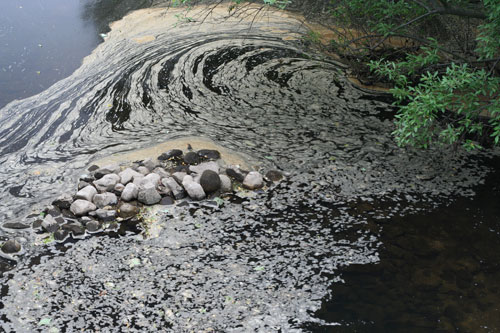
First, with the polarizing filter switched “off”:
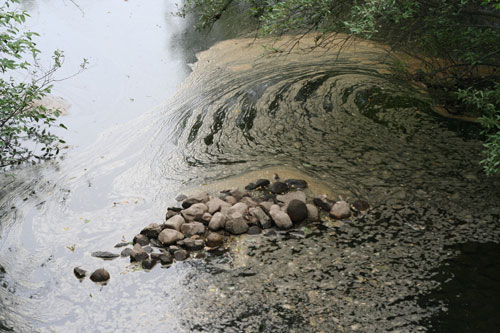
Never mind the actual content of the photo – it’s just a pile of rocks and crap in the lake near my house. I took this to demonstrate the significant glare off the water in the left-hand side of the photo. Now, with the polarizing filter switched “on”:
Note how the glare here is almost completely eliminated. Virtually the same camera angle, and the same camera settings all-around. But the filter is able to drastically adjust the angle at which light is hitting the lens – so much so that the glare is all but gone. This is particularly useful when trying to photograph subjects through glass or water, when glare can be a real pain.
Lastly, some of the best landscape and outdoor shots are taken using a polarizing filter to bump up the color saturation of the sun, sky, etc. Check out the first photo on this DPS page. Note the rich, vibrant blue sky. That’s a polarizing filter in action.
Pretty cool, eh?
Note that a decent filter can be had for less than $80. I paid exactly $80 for mine and I can tell you that it’s like making the jump from B&W television to Technicolor.
For more info, check out DPS’s more in-depth guide on How to Use and Buy Polarizing Filters.