

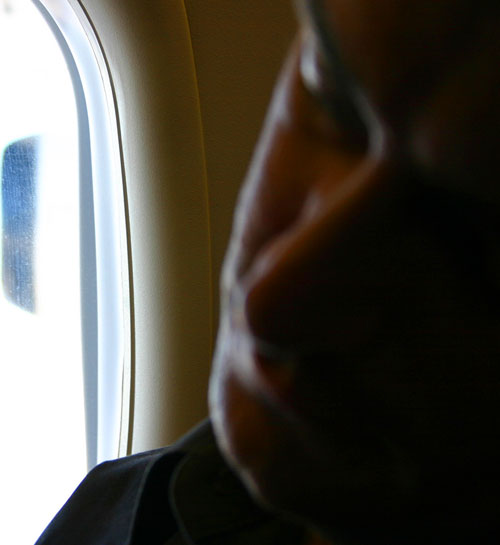
Jet lag sucks. There’s no eloquent way to put it.
Vagabondish is reader-supported. When you buy through links on our site, we may earn a small affiliate commission. Read our disclosure.
Who wants to spend afternoons of your trip feeling groggy and completely out of it, only to be wide awake at four in the morning with nobody to talk to?
There is no end of tips for beating jet lag to be read on the internet, found in travel books or told to you by your mother. But do they really work? It seems to be an entirely individual thing, not to mention different from flight to flight.
But from my way-too-many experiences of jet lag — and what works for a few friends of mine, too — here are my top six hints to help you perhaps not beat jet lag, but at least feel a bit more human when you start your trip.
Sleepy Traveler, Australia © S Baker
Tip #1: No Sleep Until Bedtime
No matter what time you arrive at your destination, don’t go to bed until it’s nighttime there.
If you do nothing else, do this. No matter what time you arrive at your destination, don’t go to bed until it’s nighttime there. This will be a big struggle, and you’ll want to sleep more than you ever have before, but be disciplined, stand up, take a long walk, do whatever it takes so that your body can start adjusting to the new time zone as soon as possible.
At the very least, last until nine in the evening before you hit the sack. Or if you absolutely must take a nap, keep it strictly shorter than an hour. On the other hand, if your body clock doesn’t want to go to bed, make it. Don’t stay up past midnight even if you’re not tired. It’s all about getting used to the new situation as fast as you can.
Tip #2: Don’t Lie Awake for Hours
Your body clock might think that the middle of the night is actually morning and you should wake up. Personally, I think the worst thing you can do when that happens is to lie there for hours trying to get back to sleep.
This happened to me recently after a flight from Frankfurt to Singapore, and I was lucky that my husband had the same problem — so we got up for an hour and played cards until we felt a little tired again, then went back to sleep until morning.
If you do get up, don’t make the room too light, or your body will think it was right about it being daytime already.
Tip #3: Get It Right While You’re Still on the Plane
The experts, whoever they may be, are always saying that you have to drink lots of water on a plane, not too much alcohol, get up and move regularly, and the list goes on. But the experts are saying this with good cause and I’m sure that I suffer less from jet lag when I take care of myself on the flight.
As tempting as it can be to indulge in that free wine on a long flight (and heck, I don’t even have to drive!), I try to stop at a small glass with a meal. One glass helps me sleep, so I figure that’s helping. Otherwise I drink endless amounts of water which has the healthy side effect of me having to get up often to visit the bathroom. Since I started following this routine more closely, my jet lag recovery time has substantially decreased.
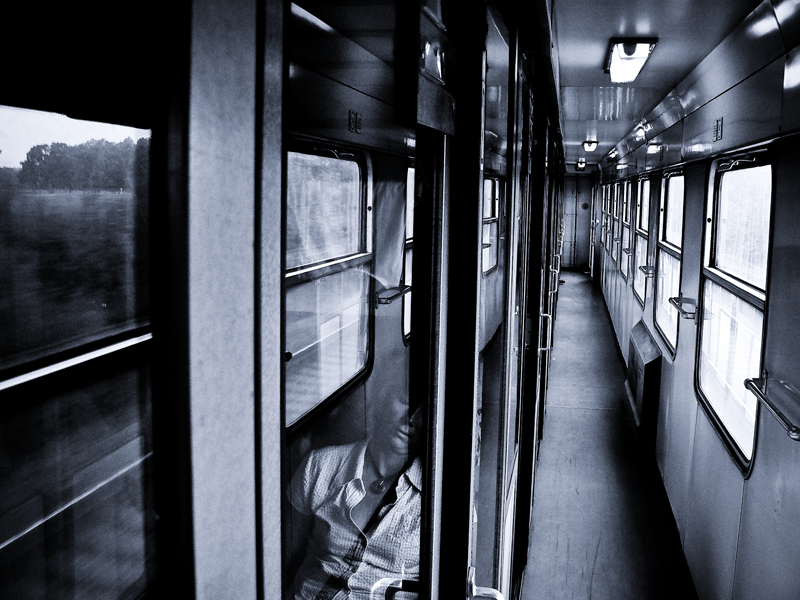
© Philip Bitnar
Tip #4: Are You a Night-Flighter or Not?
If you are keen to avoid jet lag, you might have to go back to the planning stages. You also need to know whether or not you’re good at sleeping on planes or not. And then you’ve got two choices: if you can sleep like a baby as you’re hurtling through the air (I can’t), then you can time your flight to include an “overnight” trip (remember, time is all relative here), which means arriving at your destination in the morning.
Travelers like me who are lucky to snooze for a few minutes should go for a “daytime” flight that lands in the late afternoon or evening, at which time you’ll be so exhausted from a prolonged lack of sleep that you’ll be able to fall asleep at the right time.
Tip #5: Don’t Listen to All the Conflicting Advice
Doctors and websites will tell you all kinds of other facts about jet lag that I think are less useful. The fact that you will be less jet lagged if you travel from east to west is not much use unless you have the luxury of planning a round the world trip and choosing the direction makes sense.
There are also dozens of natural or herbal remedies, over the counter medications or magic drinks that could help — if you find one that helps you, go for it, but know that there’s definitely no cure-all.

Sleepy Cat in Greek Monastery © Neal Fowler
Tip #6: Think Positive ”¦ And Just Get on With it
The funny thing is that I always notice jet lag a lot more when I get home than when I head out on a trip. Which surely means that a portion of it is purely psychological. When I’m excited about being in a new city or country and keen to get out and explore the place, being a bit tired doesn’t bother me half as much.
And while I’m not that good at following this advice myself, do the same even if you’re returning home. Stay active, stay positive and don’t dwell on your jet lag — and it’ll probably disappear that much faster.