
FEATURE //

Dark Tourism: A Fine Line Between Curiousity and Exploitation

by Amanda Kendle

Editor's note: This is part one in a multi-part series exploring dark tourism.

Most travelers say they’d never involve themselves in dark tourism, but the term is broad. Amanda Kendle explores why you may be a dark tourist without realizing it.

Filed under:
Features

Sometimes we travel to see a beautiful landscape, a precious artifact or a well-known painting. But other times our purpose is to experience something a little darker: to see a concentration camp where thousands of people were gassed to death, to visit a natural disaster zone that we’ve seen plastered across our TV screens, or to gawk at people living in poverty, sometimes with the intention of trying to help them.

All of these things and more have been encapsulated recently by the umbrella term of dark tourism. And while some people are quick to say they’d never be involved in something with a name like dark tourism, the scope is broad and you might be a dark tourist without realizing it.
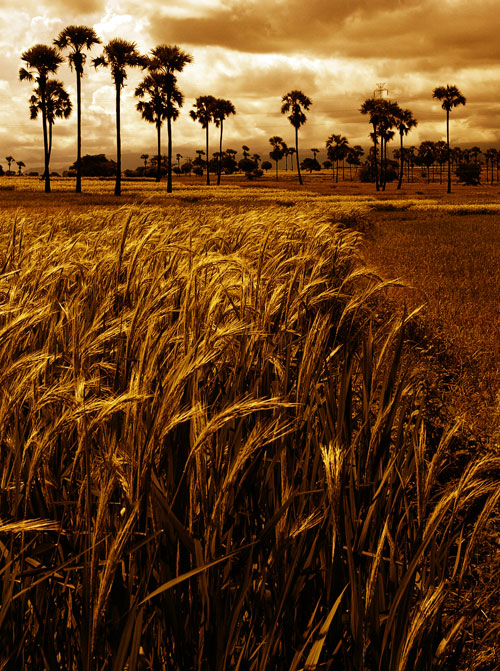
A Dark Field
© sektordua

So What Exactly is Dark Tourism?

Well, that kind of depends who you ask. But let’s go for someone who sounds quite authoritative: the University of Central Lancashire, which is actually undertaking academic research into dark tourism. They say:

Dark tourism is the act of travel and visitation to sites, attractions and exhibitions which have real or recreated death, suffering or the seemingly macabre as a main theme.

It’s a term that has only arisen in the past couple of years, perhaps brought into sharper focus with the rush of tours that followed the devastation of Hurricane Katrina in New Orleans. But people have been visiting so-called “dark tourist” sites for a much longer time – the concentration camps at Auschwitz in Poland spring immediately to mind.

Like rubberneckers at a car crash, it’s somehow human nature to want to be an eye-witness to suffering. A morbid curiosity grips many of us and although we might outwardly say we don’t want to visit the site of a natural disaster or a mass murder, a lot of us, secretly, really do. The reasons, like the reasons we travel at all, are many and varied, but range somewhere between wanting to understand how other people live through catastrophe and showing sympathy to victims, all the way through to an out-and-out interest in death and depravity.

What Kinds of Dark Tourism Are There?

Are you a dark tourist? Nearly everyone has interest in at least one or two kinds of dark tourism, even if they wouldn’t initially characterize themselves that way. But it’s certainly a matter of degrees. Over the next few weeks, I’ll be exploring a range of different traveling ideas that fit somehow into the idea of dark tourism. Here’s an overview of one way of categorizing dark tourism.

Grief Tourism

You might be surprised to learn there’s an entire website dedicated to grief tourism. I sure was. But when you get into the detail, grief tourism is a kind of sightseeing that many of us have been doing naturally for years. Basically, you can define grief tourism as being when you travel somewhere to visit a scene of some tragic event.
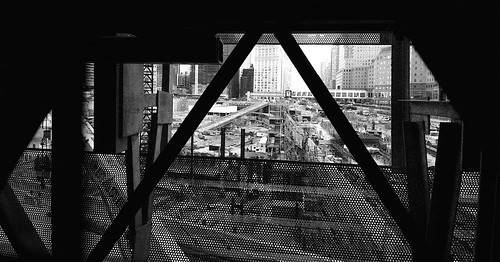
Ground Zero, New York City
Ground Zero, New York City © wili_hybrid

The most common examples of grief tourism are war-related, like visiting the concentration camps and battle sites, seeing cemeteries, and tourists coming to see where tragic crimes or events happened, for example in Soham, England, when floods of tourists visited the small village where two young schoolgirls were murdered. And perhaps the ultimate example of grief tourism is the wave of visitors to Ground Zero in New York after the 9/11 terrorist attacks.

Disaster Tourism

Some might say disaster tourism is a subset of grief tourism, but it deserves its own category after getting so much attention of late. An onslaught of visitors following some kind of natural disaster, such as those visiting south-east Asia following the 2004 tsunami crisis, or people traveling to New Orleans to see the aftermath of Hurricane Katrina, are both examples of disaster tourism.

It’s a shade more controversial than grief tourism. You could argue that those who visit disaster zones – especially when little time has elapsed since the disaster – may hinder the efforts being made to restore communities to a normal way of life. On the other hand, promoting this kind of travel might bring in much-needed income at a difficult time.
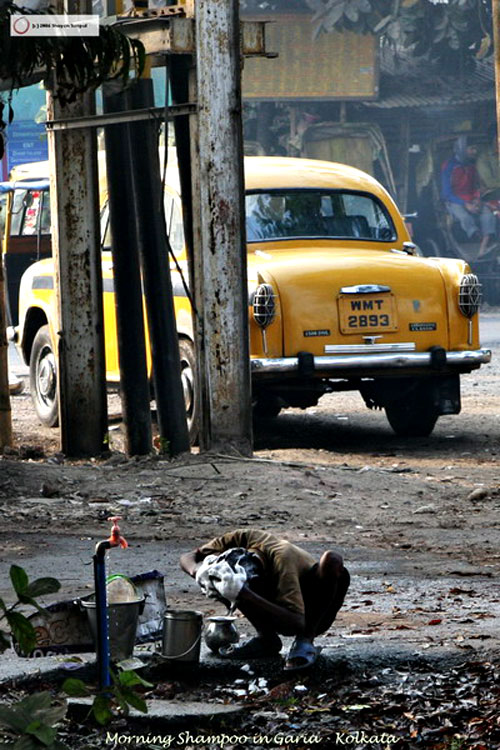
Morning Shampoo in Kolkata, India
Morning Shampoo in Kolkata, India © Shayan (USA)

Poverty Tourism

It’s a natural human trait to be interested in how the other half live. That’s why we line up in droves to trundle through exquisite royal palaces or mansions belonging to the rich. But some are more interested in how the other, other half live: the very poor.

Poverty tourism usually features tours to slum areas and poverty stricken towns. Some claim to help these poor by using profits from the tours to improve their lot, but this seems counter-productive – if they broke the poverty cycle here their tour business would close down. As you can see, I’m a bit cynical about the idea of poverty tourism. Touring a squatter camp in Soweto, South Africa, or similarly poor settlements in India, and driving through the favelas of Rio de Janeiro all belong to this category.

Suicide Tourism

This particularly dark side of dark tourism generally takes two forms. The first involves people traveling to a particular destination with the intention of committing suicide, often by jumping from a famous landmark. Statistics prove that a significant proportion of suicide cases at well-known tourist attractions are tourists, although it’s not clear whether their trip was planned around this.

A second form of suicide tourism takes into account the various laws related to euthanasia in different countries. For example, in several European countries like Belgium, the Netherlands and Switzerland, active euthanasia is not illegal, and terminally-ill people sometimes travel there to end their life legally.

Doomsday Tourism

The end of the world is coming, some people believe. Or at the very least, the end of certain tourist attractions is coming. Doomsday tourism refers to the thinking that you should hurry up and visit particular places which are under threat, usually as a result of environmental problems and globing warming.

For example, there’s been a rush on visits to see Arctic glaciers because many travelers (nudged by their travel agents) are scared they’re going to disappear. Some visitors to the Great Barrier Reef, Mount Kilimanjaro and the Galapagos Islands follow the same line of thinking. Of course, it’s not entirely logical, because the act of traveling to these places is in turn creating environmental pressures – but perhaps these travelers won’t mind, a touch selfishly, because they’ll have seen what they wanted.

Next week: exploring grief tourism.

If you liked this post, subscribe to our full feed RSS. You can also subscribe by email and have new posts delivered directly to your inbox daily.

Learn More

Related topics: Features

About the Author


Amanda Kendle is an Australian travel addict, writer and English teacher who's visited more than thirty countries. As well as regular blogging jobs including Jaunted, HotelChatter and Vagabondish, she writes magazine articles and is working on her first novel. She can be reached at her personal blog - Not A Ballerina.

Share Your Thoughts

Ken Chen
January 24th, 2008

Fascinating article! I guess I’m like most people who skip over the psychology of traveling whenever I plan my trips.

I wonder though, what is your opinion on how volunteer tourism fits into this? If disaster and poverty tourism can be subsets of grief tourism, does that also include those that travel to these places, not to gawk, but to help?

I can’t wait for the next part of this feature. Keep up the good work.

Amanda
January 24th, 2008

Ken, thanks for the feedback. It’s interesting for me, too, to look back on some of the trips I’ve made and see where they fit into the “dark tourism” spectrum.

On volunteer tourism: That’s a good question, and I think my answer is “it depends” … I guess that in general, I personally think volunteer tourism is usually OK but perhaps there are a tiny minority who sign up for it more as a “status symbol” than out of a genuine desire to help. Part of me wonders, though, that if a job gets done that the locals need, then perhaps it doesn’t matter what the motivation is. Whereas those who merely gawk are definitely not helping. What do you think?

Ken Chen
January 24th, 2008

I think you hit it right on. It all goes back to the notion of there is no such thing as a selfless act. But I say, what’s so wrong about feeling good about yourself, just so long as you really did help someone out.

There’s been many criticisms, for example of out-of-town Katrina volunteers, that accuse people of coming in, helping out, flying away feeling good about themselves but then forgetting about what they saw. In my mind this ties back to dark tourism, where it’s that urge to see human suffering that draws people in…and that in turn draws a natural desire to help out. But just like with the poverty cycle you mentioned above, flash in the pan volunteering might do more damage than good.

So how do the tour companies, or even the sites themselves, use the psychology of grief and disaster tourism to attract visitors? Are they pulling at the heartstrings of travelers simply to earn a profit, or are they really looking to educate the uninformed with in-your-face exposure? My hope is the latter.

Amanda
January 24th, 2008

Ken, my hope is the latter too, but to be honest, I’ve been kind of shocked at just how many tour operators run trips that I personally think only fit on the “wrong” side of dark tourism. Seeing poverty makes money. But there definitely are some who have a genuine aim of educating people. You just have to choose the right place, right time with the right people, I guess. Easier said than done!

Ash
January 25th, 2008

Your point regarding the pressures placed on tourist attractions in the doomsday tourism section are so accurate. its sad to think that people will selfishly, for the benefit of their own eyes, visit certain attractions in such large numbers that their visit is detrimental to the long-term sustainability of the attraction.

its sad to think that a little selfishness could result in significant pressure and irreversible negative effects being place on these destinations as a result of tourists wanting to ‘get in before the attraction is gone’.

excellent article. thoroughly enjoyed reading it! =]

Jody Williams
April 21st, 2008

Hi. Just wanted to say how much your article has helped me get a better grip on some of the issues surrounding Dark Tourism. Im a student currently looking into this subject- however so far i’ve found very little on the motivations towards dark tourism. Im wondering if you can help… You certainly seem to know your stuff!

Guillaume Le Sommer
July 24th, 2008

interesting! I’m a french student and i’m surprised to observe how this subject is developped in the anglo-saxon world; In France there isn’t such researches and it’s a big “fight” to find some books on what you call dark tourism. The only place where researches are starting i think is in Quebec . We have to do something!!!If you have some books names to give me it could be great for my works for university

sayanna
October 24th, 2008

Yeah,interesting!Amanda,Could you explain the details of benefit of dark tourism?

[...] Original article: Dark Tourism: A Fine Line Between Curiosity and Exploitation by The Travelzine for today’s Vagabond , Tuesday Edition / October 28, 2008 [...]

Bashir
October 30th, 2008

Im currently doing a Masters dissertation on Dark Tourism and have found many articles on this area. My email address is ba5h1r@hotmail.com contact me for those who would like to exchange information or ideas.
Great Article above indeed.

Alin Todea
November 12th, 2008

I think that a part of Dark tourism can also considered the livresque Dark tourism (people who want to visit areas related to novels, movies containing Vampires, Dracula, monsters). I am thinking of Loch Ness Lake visited for the monster, or Transylvania visited by tourists for Dracula or Vampires myths.

[...] find comprehensive international overview  and here a piece that provides a comprehensive taxonomy of dark [...]

Simon Linn
February 11th, 2009

How many visitors visit to Ground Zero area per day or per year! ???

rodnas
March 16th, 2009

so, what are the top destination of dark tourism ?

Who organizing this tours ? Are there any travel agency´s specialized in this type of tourism? I am reserching on this subject myself and would be interesting to getmore feedback.

Evan
July 16th, 2009

Dearly Departed Tours in Los Angeles specialise in grief tourism, mainly to do with dead celebrities. You can find them at http://www.findadeath.com.

I also know there’s a novel coming out in Australia in September 09 called Hollywood Ending which is about two teenagers obsessed with dark tourism. The author’s name is Kathy Charles and she blogs about dark tourism too at http://www.kathycharles.com.

[...] as this kind of dark tourism has been called, was made in heaven for the Lear Center, which tracks how entertainment has been [...]


TWITTER with US


SUBSCRIBE to VAGABONDISH.COM

Via E-mail: