

I began in Nicaragua, in an isolated fishing village (population: 500). From there, I took a bus, a taxi, a plane, and then suddenly descended into the chaos that is Los Angeles International Airport. I walked off the plane, mouth agape, and stumbled into the bright lights of baggage claim, drove out into a throbbing spider of freeways and into the warm, welcoming home I had left nine months before.
Vagabondish is reader-supported. When you buy through links on our site, we may earn a small affiliate commission. Read our disclosure.
Hello, reverse culture shock.
After processing the life changes that accompany immersion in new cultures, many travelers return home to find themselves at odds with their native culture ”” that their view of normal has shifted. Although sometimes frustrating, these unique first moments after arrival ”” the moments of culture shock ”” can be incredibly valuable.
Instead of curling up in a ball under a fluffy comforter and counting the days until your next departure, or hiding in the shelter of past trip memories, allow the reverse culture shock to be, well … shocking. Use your fresh set of eyes to notice the peculiarities and norms of your native culture that you may not have been able to see before. Take advantage of the shock to take stock of your life at home and, perhaps, to do something about how you live in relation to your ”˜new’ world.
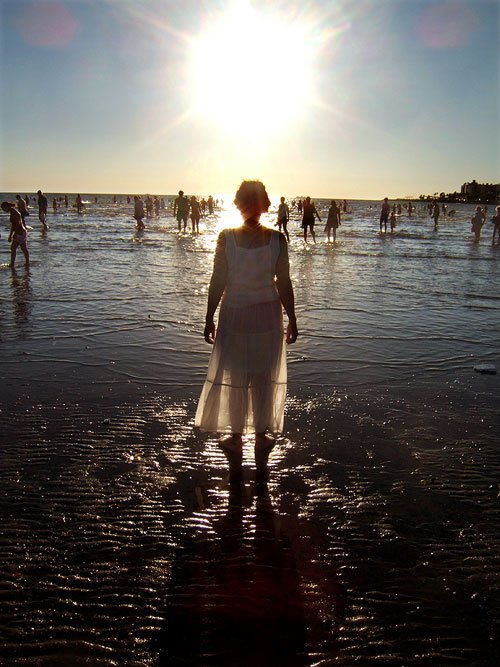
Lost Souls, Uruguay © Vince Alongi
Note Things at Home That You Took for Granted Before””That You Love
At home, I smile at strangers I pass on the street and say hello, how are you in elevators. As a foreigner wandering around Nicaragua, I couldn’t so much as make eye contact with strangers on the street, lest I be interpreted as hitting on a male or ”˜staring-down’ a female. It took me months””and many a catcall by an ”˜encouraged’ male””to quash my impulse to make eye-contact with another being passing on an empty street, and instead learned to keep my eyes down. Now, I smile at everyone and enjoy friendly grocery tellers who, even if they don’t care, ask how my day is going.
Because the town I lived in was so isolated, on errand days into the ”˜big city’ of Rivas, ice cream cone in hand, I’d sit on a bench in the plaza and just watch all the people go by. I observed the nuances of a culture just by watching people interact, talk, walk alone, rush or meander. What first struck me as I wandered around my big city airport was how many people there were””and how many different kinds of people. Quite apart from racial diversity””something I always took for granted and now love, the very existence of Asian-Americans, and African-Americans, and Armenian-Americans””there are just a lot of people. There are fat and skinny people, tall and short people, blonds, red-heads, the freckled and the non-freckled, people with big eyebrows and people with no eyebrows. And so I relish the opportunity to watch all these people, meanwhile gaining insight into my own culture.
Also, I missed granola dearly, and I appreciate it with a new zest every morning.
Note Things You Took for Granted Before””That You Don’t Like
$4 specialty iced lattes. Relish the indignity of prices: “That’s 80 córdobas, for goodness sakes””no I will not buy your medium sized coffee beverage for what, last week, I could have bought dinner for. I’ll make it at home, thank you.”
In most places in the word, if it’s hot outside, it’s hot inside. Right now, it’s June, the sun is shining, and I shiver inside a coffee shop, wearing jeans and a sweater, while the air conditioning roars above me. We over-climatize the great indoors, so that in the summer I layer up to go inside and in the winter I peel off layers in front of a hiked thermostat.
Appreciate the Things That Work
Electricity””no thrice weekly blackouts!””bus schedules, any schedule, the internet, the ice maker, ATMs, real service in restaurants ”¦ to name a few.
Politics. Yes, politics. In the midst of media analysis, it’s easy to become cynical about your country’s political process, to resort to sighing ”˜they’re all the same, nothing ever changes.’ But, after witnessing first hand the blatant corruption of a Nicaraguan election””bags of ballots found in a city garbage dump and the murders of several candidates””I appreciate first-world politics. I relish the luxury we have to bicker over our differences and then cast our vote with the faith that it will be counted.
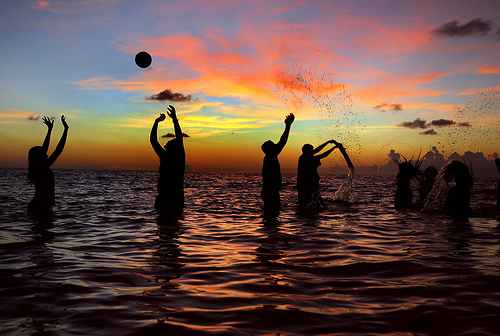
Get Lost in Your World, Maldives © notsogoodphotography
Note the Things That Don’t””and Change ”˜em
I love the simplicity of life in the third world. In the absence of material goods and electronics, people value face-to-face conversation. Perhaps the biggest culture shock for me was the omnipresence of cell phones. At lunch, they sit idly at every table like a third wheel; they bleep and usurp the conversation””especially when, scandalously, they are answered. Because I lived without a cell phone for nine months, I tend to forget mine at home, and get restless in conversations over five minutes. I relish the freedom to wander around without constant connection, and I make a concerted effort to replace phone conversations with face time.
In Nicaragua, I lived without a car, initially a huge adjustment, so I either walked or took the bus. Now, in reverse, I find that life with a car makes me cranky, that I can tolerate waiting thirty minutes for a bus but not sitting in traffic. And so I seek out public transportation, and enjoy the challenge of trying to navigate my very car-based city as a pedestrian.
Notice Absurdities””and Appreciate the Humor in Them
I was washing my hands in a public bathroom and was unpleasantly startled and confused when I accidentally set off the electric paper-towel dispenser. I recovered from my shock and couldn’t restrain a laugh: what a nifty device!
Appreciate Un-conventional Beauty
When we travel, we seek out beauty, whether it’s the raw beauty of natural wonders, or man-made beauty manifest in art museums or architecture. Returning home, it’s easy to remember that beauty and think it’s the only kind (the kind you pay a museum entrance for or that extra bit to be directly ocean front). But, remember how you seek beauty, and do the same at home, even when you dismay at freeways, traffic, and congestion.
I arrived home pining for my nightly Pacific Ocean sunset as I sat on a grey asphalt road, my view of the horizon obstructed by tall grey buildings. However, that very pause at sunset, missing what I had while traveling, heightened my senses to be able to notice a long, golden pink shadow on the west side of a white concrete office building and appreciate its beauty amid a pulsing city.