
Reserve JFK Parking, SeaTac and Orlando Airport Parking

FEATURE //

How to Master the Art of Haggling

by

Mastering the fine art of haggling is an essential skill for any long-term traveler.

Filed under:
Features, Money, Tips

Considered an integral part of the transaction process in many parts of the world, haggling often throws those of us from lands of fixed prices off-kilter. We walk away from market stands with sweat on our brow, festering feelings of frustration, and vows of restricting our shopping to air-conditioned venues with price tags. Haggling, however, is an everyday survival skill for the long-term traveler, used beyond acquiring souvenirs to negotiate transport and tickets or to purchase food.

While it may never become as easy as reading a sticker price, after mastering a few time-tested bartering tactics haggling can become a much more enjoyable and natural experience. One you may even find yourself missing when you return home and can no longer implement a half-off clothing sale on a whim.

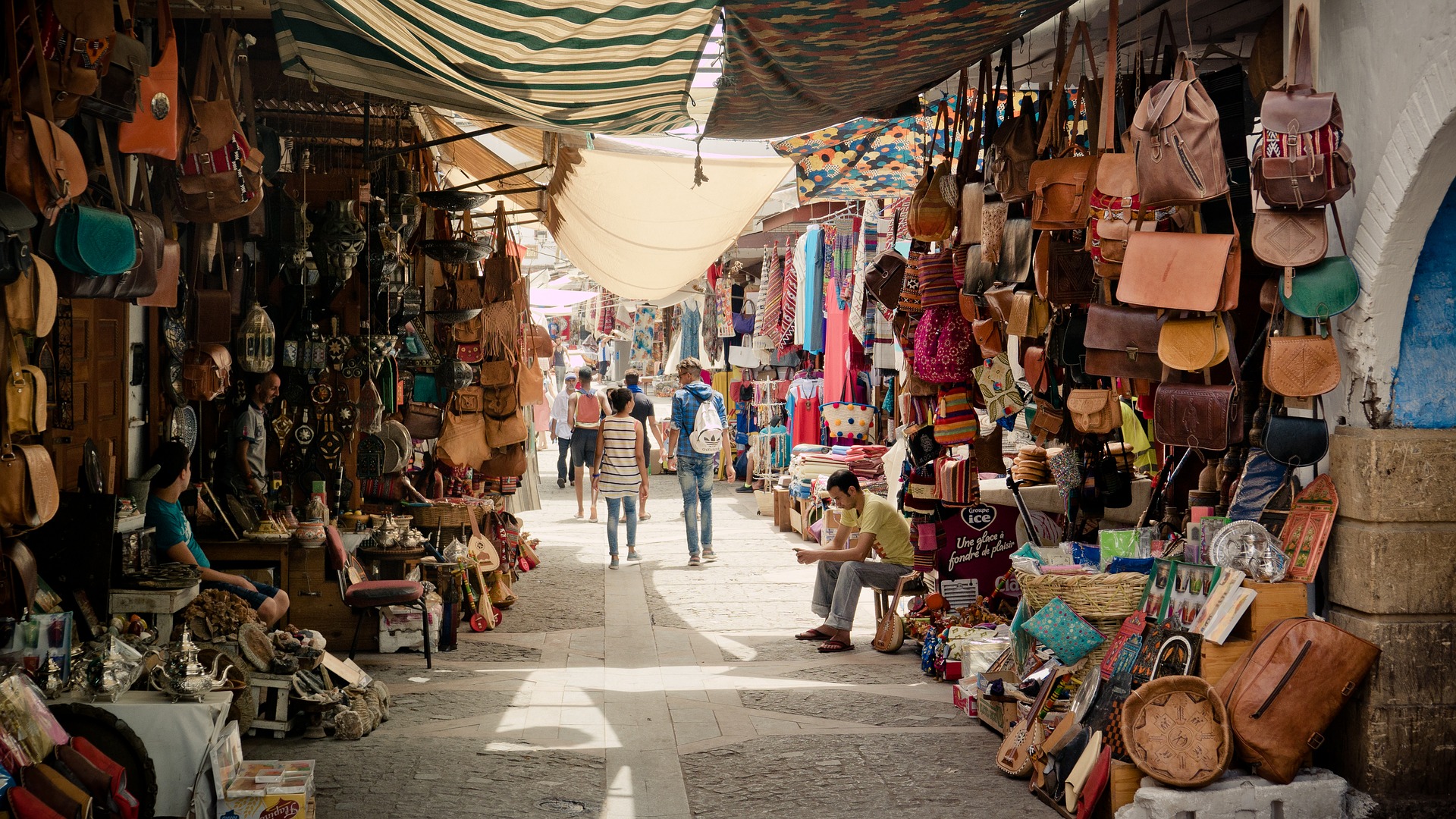
The situation: After traveling all day on a rickety bus, you’ve arrived at the center of commerce for the majority of the local world, no, not the mall, but the local marketplace. You stand transfixed, overwhelmed by the chaotic hubbub and glittering baubles for sale. It takes a minute for you to adjust, but after a moment your consumer instincts kick in and you are ready to make a purchase. You select the stall of your preference; choose your item – now all you have to do is pay. If it were only that easy …

Market, Cairo
Market, Cairo © T U R K A I R O

Never Accept the First Price

In most cultures accepting a first quote is unheard of and a blatant declaration of your foreigner status and subsequent naiveté. A first price is used by vendors to test the waters, to gauge what you’ll accept as reasonable. I’ve had a 24 rupee rickshaw ride in India quoted to me for 400.

I’ve had a 24 rupee rickshaw ride in India quoted to me for 400.

If you have an idea of an appropriate price, use it to your advantage to evaluate the one being quoted to you. Exhibiting even a little bit of knowledge goes a long way in lowering prices as merchants will realize that you are willing to barter and not simply buy. If you have no idea what a price should be, take the time to shop around at other stalls and soon a median price will begin to emerge. Another tip is to ask local shoppers or consult a guidebook as a reference. I’ve found that mentioning an outside authority, be it another customer or a guidebook, helps quickly slash prices in half.

Quote Lower Than You’re Actually Willing to Pay

Once you have determined an appropriate price range, counter the initial quote with a price lower than you would actually be willing to pay. This suggestion will probably be met with exclamations of incredulity by the vendor, but know that it is all part of the negotiation dance that takes place hundreds of times a day. The vendor will then demand a higher price, in response slowly increase your original bid to the price you had in mind –the goal is to have it end up as the final sale price.

Buy in Bulk

Another easy way to make prices come down quickly or add value to your purchase is to buy in bulk. Buying multiple quantities is an easy way to get a “two-for-one deal” or other similar bargains. Once you suggest that you are willing to purchase multiple items, the deals often begin to flow freely and with little effort on your part.

Berries for Sale, Santa Monica
Berries for Sale, Santa Monica © jchatoff

Sometimes this is all it takes and you can walk away satisfied with your purchase wondering why travelers constantly gripe about the headaches of haggling. But other times you find yourself in a situation where the vendor won’t budge and is persistently demanding an exorbitant sum. In such situations, having the following two tactics in your arsenal is crucial for successfully negotiating a deal.

Do the Fake: Act Like You’re Going to Walk Away

If the vendor refuses to negotiate but you’ve found the perfect gift for mom and nothing else will do, throw up your hands in frustration and start to walk away. Draw on those high school drama classes and make it believable. Usually the threat of completely losing a transaction will have the vendor calling after you with a lowered price, allowing discussions to start anew.

Exploit The Threat of Competition

Another option is to employ the competitor threat. In the midst of negotiation, simply mention that you are willing to go elsewhere for your purchase. Working in a similar manner to walking away, vendors become much more willing to negotiate after they realize that they might lose business to one of their neighbors. Use this to your advantage to achieve your desired price.

A Word of Caution

While it’s great to get a good deal, it’s also important to keep exchange rates and perspective in mind when in the heat of the haggle. I’ve stopped myself before realizing that I’ve been resisting making a purchase over the equivalent of 50 cents. My budget can survive the 50 cent foreigner markup without making too much of a dent; however, the local equivalent can have a significant impact on the vendor’s daily earnings. While what price you settle on is up to you, it’s important to realize when you are negotiating for real value or just fighting over nickels and dimes.

Now, it’s finally time to make your purchase. The money is exchanged and the item received. Congratulations you have successfully completed your first market transaction! After a few more purchases, you’ll be bartering like a pro and creating your own ingenious tactics. Just expect some resistance when you return home and try to get your morning latte down to $2.50 from $3.

What are your tips for haggling like a pro? Share them with us in the comments below!

If you liked this post, subscribe to our full feed RSS. You can also subscribe by email and have new posts delivered directly to your inbox daily.

You Might Also Like

About the Author


Kathryn Alex is a freelance writer and devoted wanderer stopped for the moment in New York City. Her most recent travels took her to India where she fell in love with its vibrant chaos and masala dosas.

Share Your Thoughts

Sean
January 13th, 2009

My only tip is to make sure you know the exchange rate. In one transaction in Mexico I got flustered while haggling and spent way to much because I messed up the conversion from pesos to dollars. I guess it was a learning experience though…

m.ilyewren
January 13th, 2009

Watch the body language of locals as they haggle; each culture is unique.
Haggling in the native tongue, even simply, may earn you great bargaining power.

Scribetrotter
January 14th, 2009

I’d like to add the following if I could…

I would suggest that whatever happens, you stay calm. If you’re getting upset, walk away.

If you actually make an offer, you will be expected to honor it. Don’t just make a firm offer and then walk away. It diminishes all of us. If you’re not serious about buying, then don’t make an offer.

Don’t look too interested. Sellers will be watching you carefully and the more you want an object, the more slowly prices will go down.

Ask for the price of two or three items so the one you really want won’t be that obvious. Using strategy is part of the game!

Happy Haggling!

Daniel
January 14th, 2009

In some countries, almost everything can be negotiated. When I first moved to Korea, the idea of haggling was obviously strange to me. I think the biggest obstacle was the self-consciousness that came with haggling — it’s not something you’d ever think about in the States.

Also, it’s probably a good idea to learn the phrase “how much?” as well as numbers in the local language. It gives the vendor the impression you’re not a clueless tourist, and he might be more reasonable in his haggling.

Irish polyglot
January 14th, 2009

I’ll be moving to India next week so it’s always good to get reminders and learn new strategies! I’ll reemphasize what was said in the comments about showing a lack of interest. Being enthusiastic is a giveaway that you’ll pay whatever they want you to.

Also if you are with someone and you want to discuss something you like in front of the seller do not do it in English, since they’ll most likely understand. Use your highschool French or invent a code for example. My sister and her husband (then boyfriend) in India would always use a couple of Irish Gaelic words, so she would say “go maith” (good) while nodding her head in disappointment indicating to her bf that he should really try to get this one (for a good price). I loved haggling in South America – can’t wait to do it daily in India! It’s fun :D

Ryan Bruce
January 14th, 2009

The bariste at Starbucks had a shocked look on her face when I tried bargaining an Espresso Truffle Latte.

I think the only way I didn’t look like a complete fool (or maybe this made me one) is that I used a foreign sounding accent and wore aviator glasses.

Gennaro
January 14th, 2009

Pretending to walk away definately works. They see that sales moving off and it cut the price down immediately.

I like to let seller win the last negotiation though. It’s usually over less than a dollar in poorer countries.

reina
January 15th, 2009

Just don’t overdo it. I’ve listened to people haggle over a few cents in Laos, using all the hardcore tactics they’d probably learned in the souks of Marrakech. When I’m not in a mainstream tourist venue, I sometimes just ask for a discount with a friendly smile. Serious shoppers might want to be the first in the stores. In SE Asia, the first sale of the day is lucky, and shopkeepers really want to close the deal.

steph
January 16th, 2009

Two more favorites of mine:
-Tell the vendor you’ve already got one of whatever they’re selling and then name the price you already got it at. Supply and demand dictates that the price had better be even lower if you’re going to be convinced to buy a second one you don’t need.
-I had my eye on a necklace that, as a student, I totally couldn’t afford. The day before leaving the country, I brought in all my remaining change, and my plane ticket showing I was leaving the next day, and urged them to take everything I had left in exchange for the jewelry. I started goofing around and throwing in other items I’d brought with me on holiday that I didn’t need anymore (shirts,a hat, bubbles). I think they agreed to the exchange just to get me out of their store ;)

Lopar
January 19th, 2009

Haggling can be a lot of fun and it’s easy to get caught up over 50 cents, I think we’ve all been there. A lot of people try to avoid it but I think it’s all part of the experience!

wishiwerehiking
March 13th, 2009

It’s can be a culturally-strange feeling as here in the US haggling is usally unacceptable and even rude, but when we realize it’s not only not rude but expected in other countries, that diffuses self-consciousness.

Flea markets and gargage sales are great ways to practice haggling here in the US in person. Those are two venues where haggling is expected in our country.

uberVU - social comments
January 13th, 2010

Social comments and analytics for this post…

This post was mentioned on Twitter by vagabondish: How You Can Master the Art of Haggling http://retwt.me/I2hO #travel #money…

Fresh From Twitter
April 7th, 2011

[...] parents won’t even notice RT @vagabondish: How to Master the Art of Haggling #travel – http://bit.ly/anU4aB Hotel Travel Guide And Tips http://www.is.gd/7IpfG1 #hotel #travel #guide #and #tips Yeeeeess, bsk [...]

Ryan
April 7th, 2011

The fake out/mentioning the “other vendor” who is selling it at much cheaper is almost always a winning combo. But in regards to speaking the native language I’ve had mixed experiences @m.ilyewren, whenever shopping with friends while I was in Guatemala, I was usually the designated translator, and while it did help gain me some bargaining power it also opened up the possibility for the vendor to try and reason with me, as opposed to my friend who employed the tactic of pretending only to know the Spanish word for whatever price she wanted to pay and simply walking away if she didn’t get it (she almost always did :) )


TWITTER with US


SUBSCRIBE to VAGABONDISH.COM

Via E-mail: